Guernsey Nurse Creamery
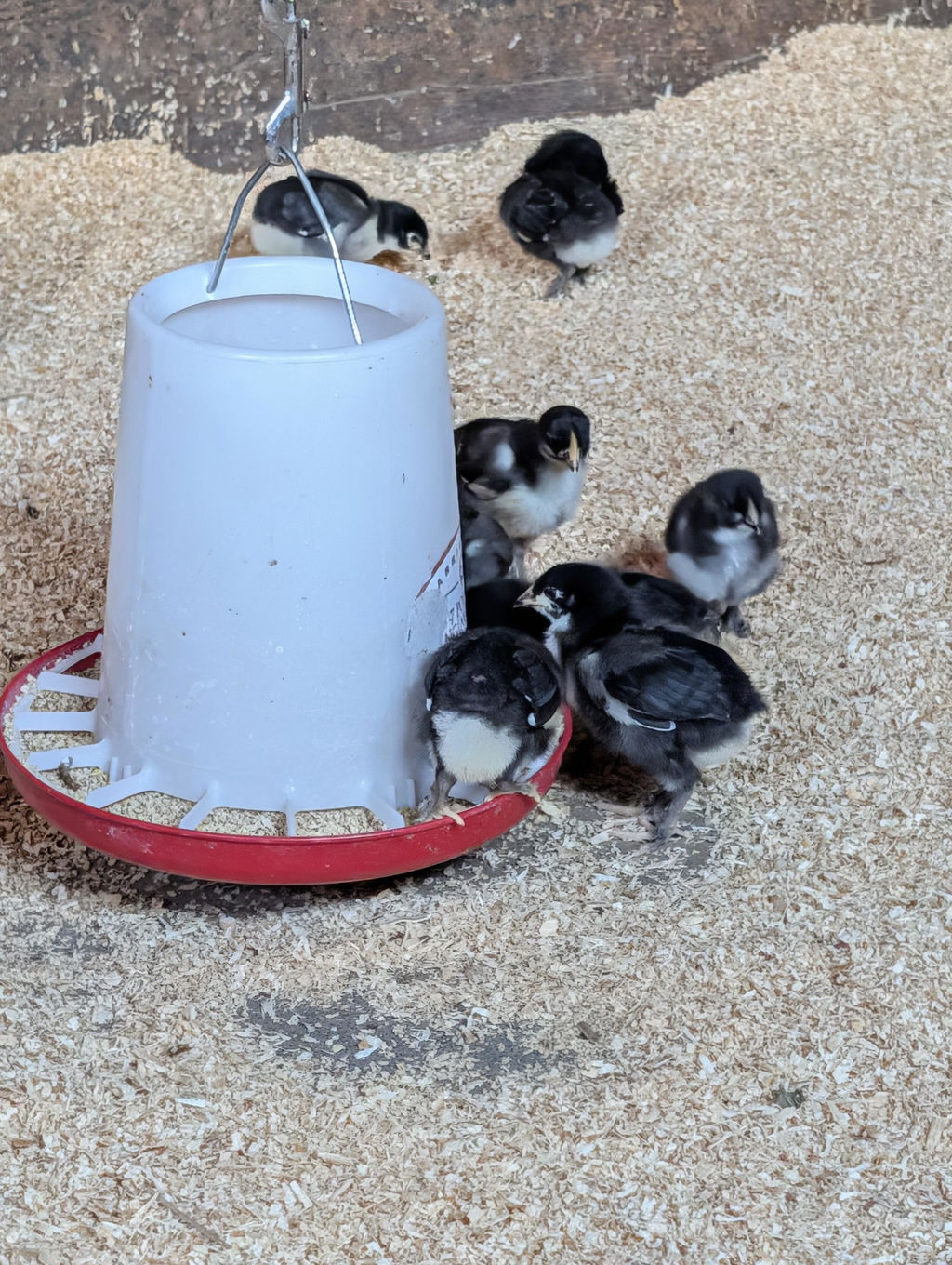
BLACK COPPER MARANS CHICKS
BLACK COPPER MARANS CHICKS
Couldn't load pickup availability
This is the price for 1 chick. I only sell straight run chicks I do not squeeze chicks to ascertain their sex. When I started with this breed I paid $69 a chick from GFF located in Florida and they too only sell straight run chicks. I have since added their (2023 Import Egg Champion Line) to my flock. In which they sell for $24/egg or $79/chick .
I've heard them referred to as "the most expensive chicken eggs in the world" and until recently they have been fairly hard to come by. They are said to be prized by French chefs and are slightly harder to hatch than other breeds. Many people are only familiar with the name Marans because James Bond was said to only eat the speckled eggs from Marans hens in From Russia With Love. While I can't comment on Mr Bonds particular idiosyncrasies, I have Marans and I have to tell you, not all those other rumors are true! Here's the big bad secret no one wants to tell you....They taste the same as any other farm fresh egg. OMG I admitted it! lol I can't even count how many people have told me "I've heard Marans eggs are the best tasting eggs in the world" Now, that's just silly! I mean, compared to store bought eggs then yeah...sure, Marans eggs are better.
If you compare them to my other free range chickens though, you can't tell the difference. On second thought.....we should probably just keep that last one between us. Especially if Mr Bond asks! However some French chefs are reputed to ONLY cook with Marans eggs, claiming they are superior in taste and quality—— They actually might be onto something because according to the French Ministry of Agriculture, Marans eggshells have smaller pores than the shells of other breeds and thicker shells and inner membranes, making them far less likely to contain salmonella and allowing the Marans eggs to stay fresher longer. So it’s really up to you to decide if they are in fact the best!
Note: This thicker outer layer can make hatching Marans eggs a bit challenging, with a lower success rate than other breeds.
FUN FACTS:
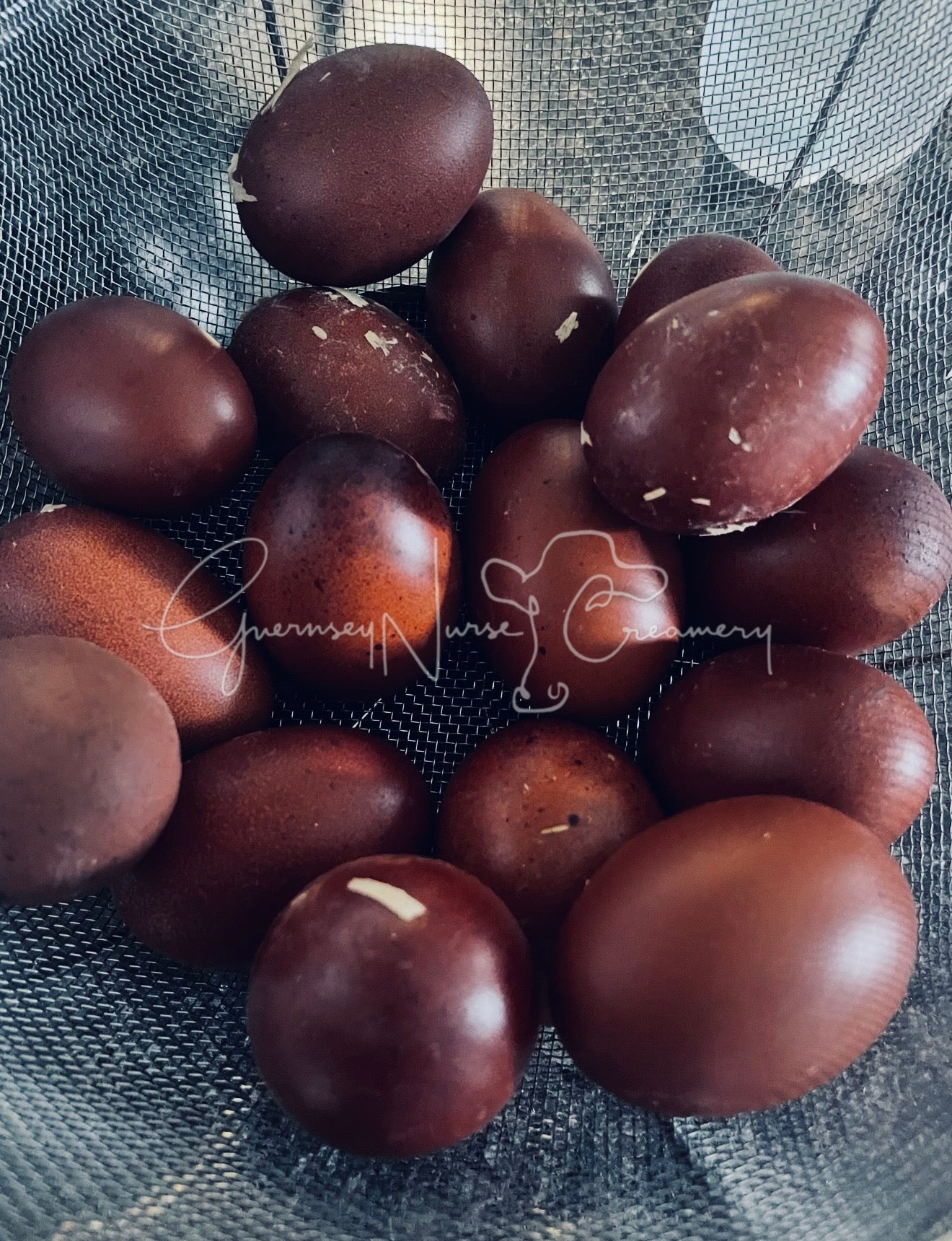
1) Marans eggs change colors. When a Marans pullet starts laying she will lay very dark brown eggs. As the laying season progresses her eggs get lighter. After a molt or seasonal break, her eggs start out dark brown again.
She will repeat this cycle throughout her lifetime however they will lighten up a bit after the first year or two. They'll still follow the pattern of darker in the spring and lighter by fall though they'll never ágain get as dark as that first year.
2) The color can be wiped off of a Marans egg. Isn't that odd? If you try to clean a Marans egg and wipe too hard, the color will come right off!
3) The color is on the egg shell, it is not the color of the egg shell. It's a wet mucous like coating which dries quickly after the egg is laid.
4) Some eggs are speckled, some are not.
The Black Pearl of all Chickens! And ohhhh so chocolatey! This breed originated in France and is named after the historic port town of Marans.
Therefore, even a singular bird is called a Marans (with an s) Here at GNC our BCM flock is a purebred line of birds with no hatchery bloodlines. Our flock is of the best bloodlines and I’ve been working with this breed since 2015. BCM chicks hatch black with white bellies and mixed black and white faces, lightly feathered shanks and toes. We are constantly working to further improve our BCM flock. We breed for temperament and overall health as number 1 priority, egg color as number 2 priority, and breed SOP (Standard of Perfection) as number 3 priority. Breeding for dark egg color alone can result in birds that lack appropriate temperament or display disqualifying physical features. We strive to breed to the French standard AND consistently desirable egg color. Eggs can be solid dark chocolate brown, dark reddish brown or any of the above with speckles.
Our Roosters come from dark egg genes. The chicks you will receive are from our carefully selected established layers of high quality BCM eggs.
I can not guarantee you will get all dark egg layers or all hens. The reality is that only the first few eggs laid in the season will (or CAN be) a darker brown color. With each egg they lay, the color will lighten up a bit. At the end of their laying season, they can be a lot lighter. And then the cycle will start all over again.
I have to admit, I chased the rainbow for the darkest eggs out there. I spent a lot on hatching eggs and chicks when I first got started with this breed. They don’t all hatch and they are not all hens. I’ve purchased from GFF, Sage Acres and many other top breeders to only be left disappointed. Truth is in the beginning Learning this reality of their egg color was not what I wanted to hear. If you do have hens that regularly lay the darkest eggs (the ones we are all wanting), they will also be the hens that lay the fewest eggs. This is because the eggs get lighter (as described above) with each egg laid. The more eggs laid, the lighter they will be. The fewer eggs laid, the darker they may be.
Just remember, if a gypsy shows up on your street selling Black Copper Marans, touting they have the darkest , or misspelling the name Marans by dropping the “S” and an over abundance of dark chocolate colored eggs – beware! You’ve been warned. While I don’t like putting others down, just know I’ve gone down that road just to be disappointed time and time again!
With that being said they are still very pretty chickens with the potential to lay some pretty dark-colored eggs. So let’s not throw in the towel. Marans eggs are still good eggs regardless of their color. There is more to this breed than just the egg color. They love to forage and scratch all day long in pasture . This breed is docile . I have yet to raise a Rooster that is aggressive towards me . This breed is considered to be a rare breed, and quality can be a bit hard to find. They drop off on egg production when the clocks are turned back in the fall. I don’t provide supplemental light to keep up egg production. Chickens need a much deserved break from laying eggs and it’s a natural cycle for them to reduce laying in winter.
Share


Love our little fuzzies! Amy hatched more than we ordered and gave us lots of extras. 3 weeks later all are healthy, happy & entertaining. Looking forward to beautiful chocolate eggs! In the meantime having a great time watching them grow.🐥🐥